Mar 11, 2026
The modern engineer — What it takes to stand out in 2026
The definition of a strong software engineer has changed quietly over the past few years. Not because the fundamentals of engineering have disappeared, but because the environment around them has evolved.
Software now operates at a different level of complexity. Products are built on distributed systems, powered by data and increasingly influenced by AI. Delivery cycles are faster. Infrastructure is more abstracted. Teams are smaller and expectations of individual impact are higher.
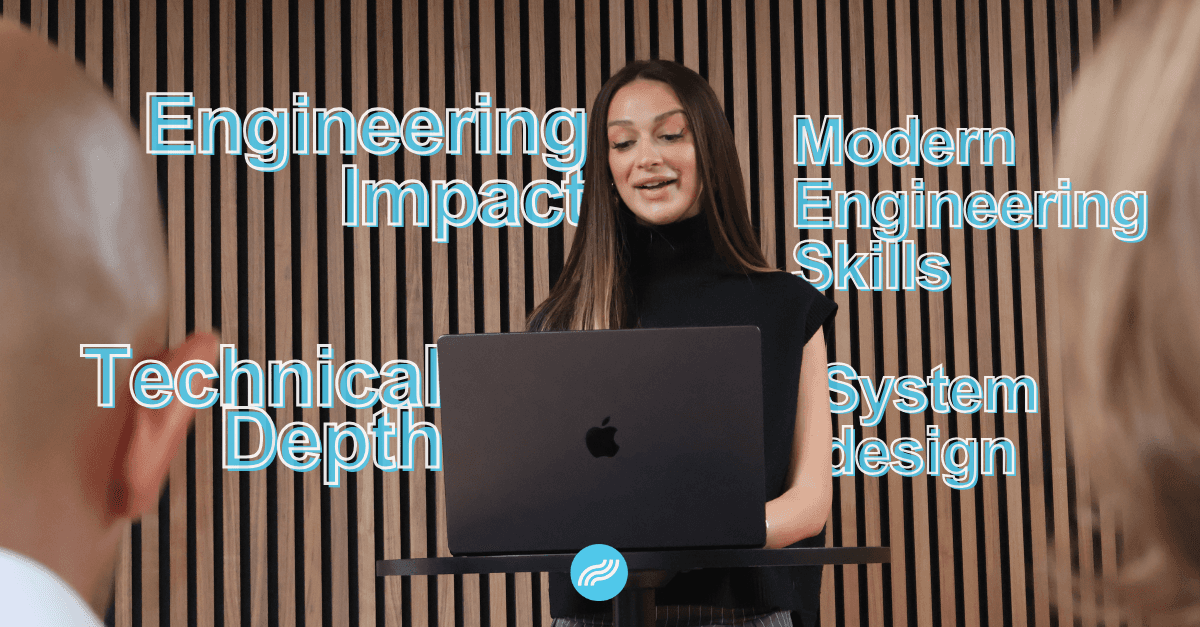
In that environment, the engineers who stand out are not defined by one technology or framework. They are defined by how they combine technical depth, system awareness and product understanding.
At the core of the modern engineer is still strong engineering discipline. Writing maintainable code, understanding algorithms and designing systems that behave predictably remain essential. What has changed is how those capabilities are applied. Engineers are expected to think beyond the code they write and understand how their work interacts with the wider system.
System thinking has become one of the defining characteristics of high-performing engineers. Modern platforms involve APIs, microservices, data pipelines, cloud infrastructure and external integrations operating simultaneously. Engineers who can understand how those components interact, and who can identify where problems originate when systems behave unexpectedly, create disproportionate value.
This ability often shows up in engineers who are comfortable operating across different parts of the stack. Deep expertise still matters. Many engineers have a core domain such as backend systems, data engineering or infrastructure. What differentiates them is a working understanding of the layers around that domain. They can follow the path of a feature from the user interface to the service layer, into the database and through the infrastructure that supports it.
AI has also changed how engineers work day to day. Tools that assist with coding, debugging and documentation have increased individual productivity, though they have also raised expectations. Engineers are no longer measured only by how quickly they can write code. They are evaluated by how well they can design systems, validate outputs and ensure that AI-assisted work behaves reliably in production environments.
This is where process knowledge becomes critical.
Modern engineers understand how software moves from idea to production. They are comfortable with version control, automated testing, continuous integration and deployment workflows. They think about observability, monitoring and reliability from the start rather than treating them as afterthoughts. The ability to build systems that remain stable under real usage conditions is becoming as valuable as building them in the first place.
Product awareness is another increasingly important skill. Engineers who understand the context behind what they are building make better decisions about trade-offs. They know when performance matters more than complexity, when a simple solution is preferable to an elegant one and when technical improvements should wait for product priorities.
Communication is often the final differentiator. The engineers who influence teams most effectively are able to explain complex technical ideas clearly. They help product managers understand constraints, help designers understand possibilities and help other engineers understand why certain decisions were made. In modern product teams, engineering is as much about collaboration as it is about implementation.
All of these qualities combine to form what many leaders now describe as the modern engineer. Someone with deep technical capability, broad system awareness and the judgement to make decisions in environments that rarely have perfect answers.
This evolution is also shaping how companies hire. Organisations are placing more emphasis on engineers who can own outcomes rather than narrowly defined tasks. They want people who can move comfortably between disciplines, who can adapt as technologies evolve and who understand the lifecycle of the systems they build.
The technologies themselves will continue to change. Languages, frameworks and platforms will evolve as they always have. The underlying qualities that make engineers effective are becoming clearer.
In 2026, the standout engineers are not the ones who know the most tools. They are the ones who understand how technology, systems and products come together to create something that works.
Articles


