Dec 10, 2025
How Python developers have evolved over the last year
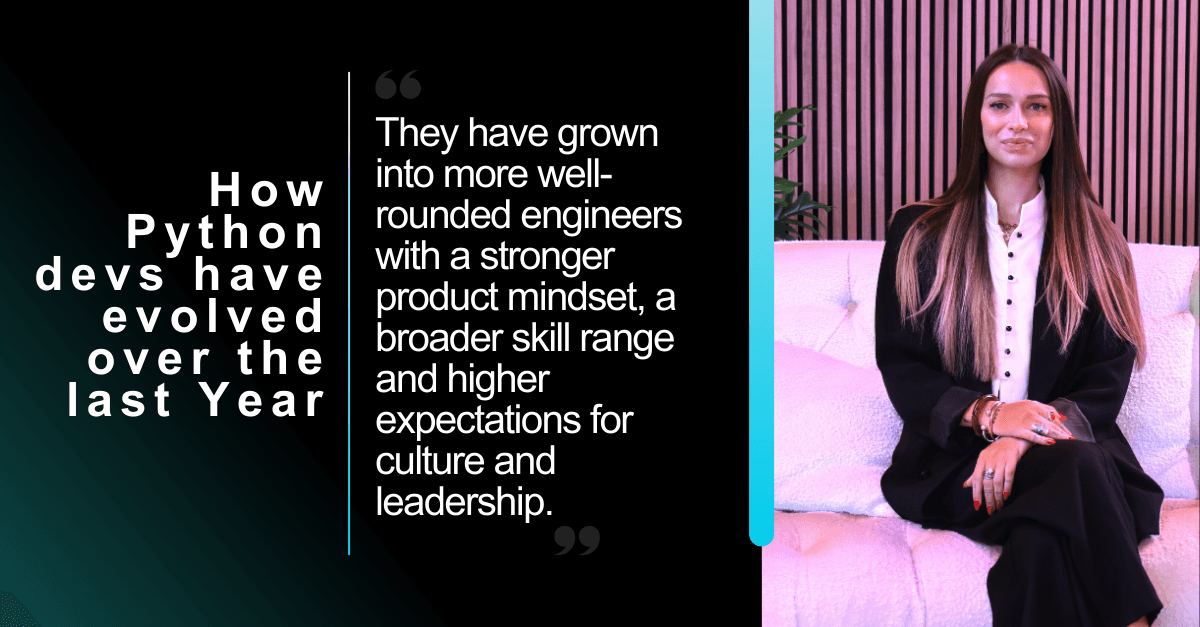
Over the last year, the Python market has moved in a way that feels sharper, more mature and far more intentional than anything I have seen before. Talking to Python developers every day gives me a clear view of how their expectations, motivations and skills have shifted. The conversations feel different. The priorities feel different. The way they talk about engineering and product feels different. The role of a Python developer has expanded, and the mindset behind it has expanded too.
One of the biggest changes is how product-aware Python developers have become. A few years ago, many conversations focused on frameworks, version control, tech stacks and individual tasks. This year, developers showed a far stronger interest in how engineering decisions influence product outcomes. They want to understand how their work contributes to the roadmap, how user needs guide the architecture and how the business measures success. Python talent now thinks in terms of ownership, impact and direction. That shift has been one of the most noticeable developments in the market.
Another evolution is the widening scope of what a Python developer is expected to handle. Python roles used to fall into neat categories: backend engineering, data engineering or automation. That definition feels outdated now. Python developers today often work across multiple areas with confidence. They contribute to backend systems, build data pipelines, support ML integrations, design APIs, maintain cloud-native workflows and streamline automation. The modern Python engineer moves across disciplines with an ease that reflects the flexibility of the language and the maturity of the ecosystem. Employers value this range, and developers are fully aware of the opportunity it creates.
Hiring processes have also become a major focus for Python talent. Developers pay attention to structure, communication, technical depth and the way exercises reflect real work. Conversations increasingly include feedback on whether tasks align with the role, whether interviewers communicate clearly, whether timelines feel considered and whether the process reflects an effective engineering culture. Developers evaluate the experience deeply because the experience signals what working with the team will feel like.
Engineering culture remains a central theme in every conversation I have. Python developers want to know how teams collaborate, how code reviews are handled, how technical decisions are made, what deployment cycles look like and whether senior engineers or tech leads actively mentor the team. They ask about documentation, stability, design decisions and progression paths. Culture now feels like the real differentiator between an attractive opportunity and a role that never gains momentum.
A final shift worth noting is the growing expectation that engineering leadership provides clarity. Senior Python developers consistently ask about architectural vision, strategy, long-term system direction and the technical philosophy of the organisation. They want to understand how leaders think, how teams grow and how technical debt is handled. The appetite for strong leadership is far higher now than it was a year ago.
This has been a year of evolution rather than adjustment. Python developers have grown into more well-rounded engineers with a stronger product mindset, a broader skill range and higher expectations for culture and leadership. These shifts have influenced every hiring conversation I have been part of.
If you are building Python teams or planning to scale technical capability this year, I am always available to share what I am seeing across the UK and European market. The Python community is evolving quickly, and staying close to those shifts creates a meaningful advantage.
— Charlie Hannah White, Python Specialist at Tides
Articles


