Jan 15, 2026
Why tech hiring feels harder right now, even for teams doing “Everything Right”
A lot of TA leaders and hiring managers are quietly saying the same thing right now.
On paper, hiring should feel easier. There are more candidates engaging, fewer inflated salary spikes, and roles are being approved with clearer budget control. Yet day to day, hiring feels slower, heavier and harder to close than expected. This disconnect is one of the defining features of the current tech and AI hiring market. What’s changed is not volume. It’s behaviour.
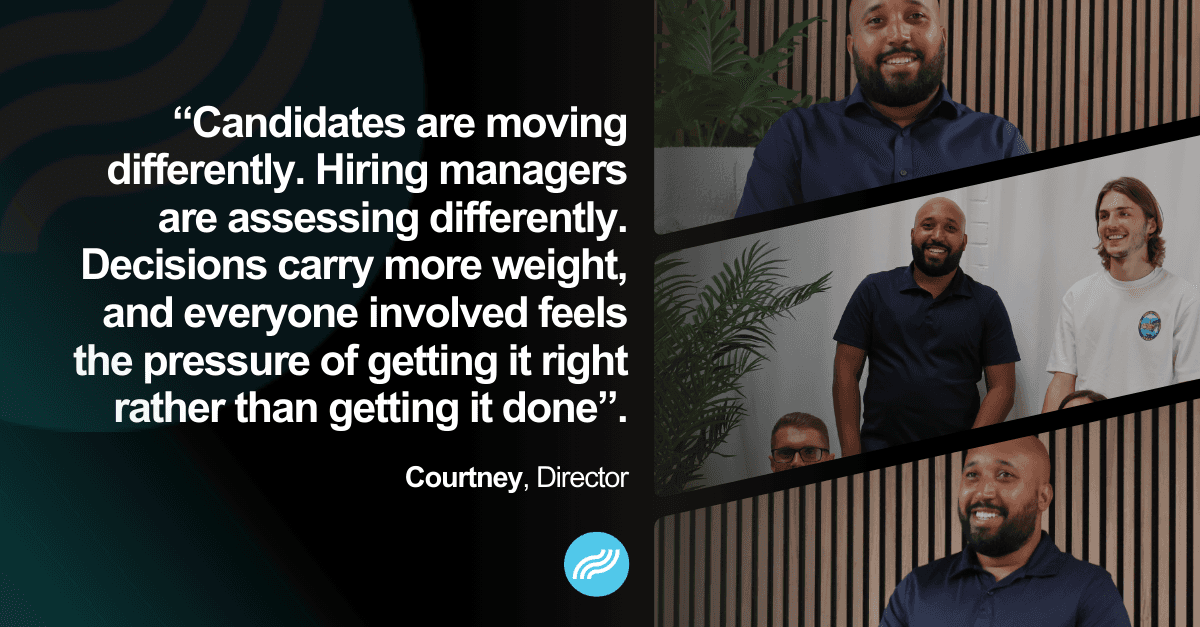
Candidates are moving differently. Hiring managers are assessing differently. Decisions carry more weight, and everyone involved feels the pressure of getting it right rather than getting it done. That shift has altered the rhythm of hiring in ways many teams didn’t plan for.
Senior engineers, product leaders and AI specialists are approaching opportunities with a far more deliberate mindset. They engage earlier, ask sharper questions and commit later. They want to understand context before committing energy. They evaluate leadership, delivery expectations and decision clarity long before compensation becomes the focus.
For hiring teams, this creates a sense of friction. Pipelines look active, yet momentum feels fragile. Interviews progress, yet confidence remains tentative. Offers are made, yet acceptance feels less predictable than it used to.
A big part of this sits with role definition. Many roles are approved with broad intent rather than precise outcomes. The mandate evolves during the hiring process. Success metrics are implied rather than explicit. Candidates pick up on this quickly. High-calibre talent wants to understand what they are being hired to own, how success will be measured and where decisions sit. When those answers feel loose, commitment stays loose too.
Hiring processes have also come under sharper scrutiny. Candidates now read process design as a signal of how teams operate internally. Long loops without clear purpose, repeated stakeholder interviews with overlapping scope, or delayed feedback all introduce doubt. Not frustration — doubt. That distinction matters, because doubt slows decisions.
TA leaders who are seeing the strongest outcomes right now are the ones shaping process intentionally. They’re working closely with hiring managers to reduce ambiguity, sharpen interview focus and move with visible intent. Process is no longer administrative. It’s communicative.
In AI and advanced engineering hiring, this is even more pronounced. The market has moved into an accountability phase. Leaders are prioritising engineers who have taken systems into production, owned reliability and understood the trade-offs between ambition and execution. Candidates with that background want environments that reflect the same level of seriousness. They listen carefully for how delivery is discussed, how leadership engages and how infrastructure supports real work. All of this has elevated the role of TA.
The most effective TA leaders right now are not order-takers or process managers. They are market interpreters. They help hiring managers understand candidate psychology, timing risk, competitive positioning and where clarity is missing. They guide decisions before problems appear. They create alignment early, rather than repairing it late.
What we’re seeing is a reset in how hiring works. Not a slowdown. Not a rebound. A recalibration toward judgement, clarity and follow-through. Teams that recognise this are adjusting how they define roles, how they communicate intent and how they design hiring journeys. Those that don’t often feel like they’re working harder for diminishing returns.
For TA leaders and hiring managers across tech and AI, this moment presents an opportunity. Hiring done with intent, precision and market awareness creates a meaningful advantage. The teams that adapt now are the ones building momentum quietly while others wonder why hiring feels heavier than it should.
At Tides, we sit inside these conversations every day. Understanding the market as it exists today, not as it used to be, is what allows hiring teams to move with confidence again.
Articles