Mar 4, 2026
Why AI is changing the shape of product engineering teams
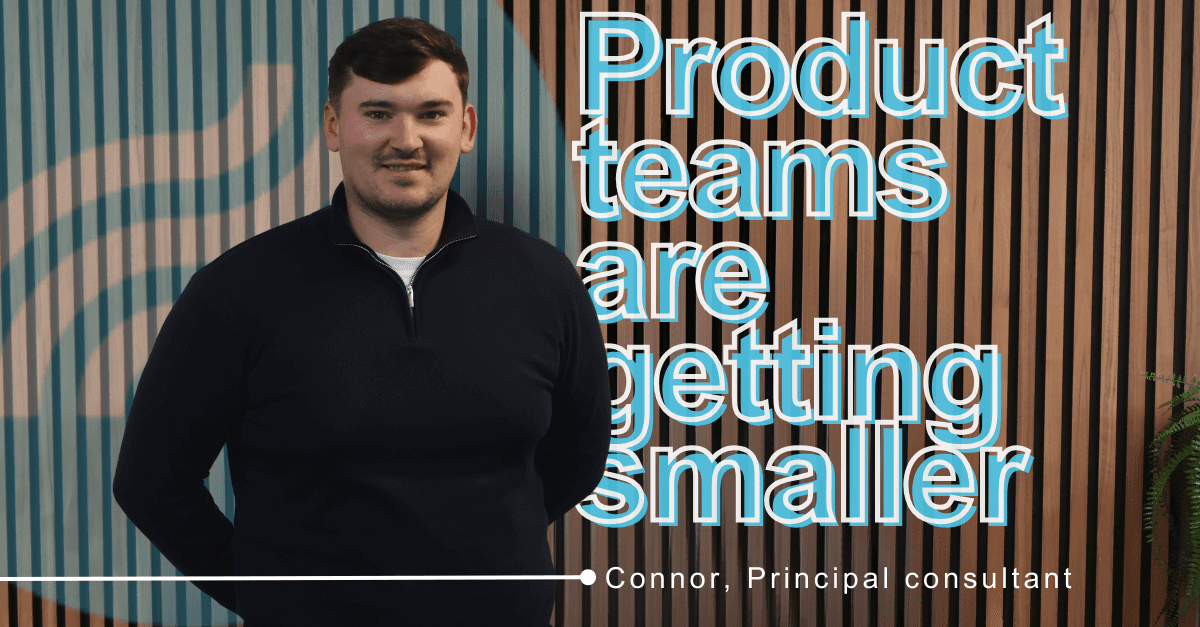
By Connor Pyner, Principal Recruitment Consultant AI
In the last few months a pattern has started to appear in conversations with hiring managers across product and engineering teams.
The message has been surprisingly consistent. Product teams are becoming smaller.
Not because organisations are reducing their ambitions or shipping fewer features. In many cases the opposite is true. The pace of product development is increasing. The difference lies in how that work is now being delivered.
AI-assisted development is changing what an individual engineer can realistically build.
Historically, many product organisations were structured around specialisation. Frontend engineers focused on the interface. Backend engineers handled services and infrastructure. Platform teams managed deployment environments. Each part of the system had clear ownership, and work moved through those layers sequentially. That model still exists, though it is beginning to shift.
With modern AI tooling supporting development workflows, engineers are able to move across parts of the stack more comfortably than before. A backend engineer can generate and refine frontend components. A product engineer can quickly prototype interfaces, connect APIs and deploy features without needing to hand work between multiple teams.
What this creates is a different expectation of capability. Hiring managers are increasingly looking for engineers who can operate end to end. They want people who understand the product context, can design solutions across the stack and take ownership of features from idea to production.
This does not mean deep expertise is disappearing. Complex systems will always require specialists. Infrastructure, security and data platforms still demand focused experience. What is changing is the centre of gravity inside many product teams.
The most valuable engineers are becoming those who can connect these layers together.
In practical terms this means engineers who understand how the user experience connects to backend logic, how data flows through the system and how infrastructure decisions influence performance and cost. They are comfortable moving between these areas and using AI tools to accelerate work that previously required separate roles. For hiring managers this has implications for how roles are defined.
Instead of searching for narrowly defined skill sets, many are beginning to prioritise engineers with broader product awareness. Engineers who are curious about how things work beyond their immediate domain tend to perform well in these environments. They are able to adapt as the product evolves and contribute in areas that previously sat outside their job description.
From a team design perspective, this shift often results in smaller groups with wider individual responsibility.
Rather than dividing work across many specialised contributors, teams are built around engineers who can own meaningful parts of the product. AI acts as a multiplier, helping individuals move faster across tasks that once required several different roles.
For candidates, this trend creates an interesting opportunity. Developers who invest time understanding the full lifecycle of a product are increasingly valuable. Being able to talk about how a feature was conceived, built, deployed and improved over time sends a strong signal in hiring processes. It also reflects how many modern product teams actually operate.
At Tides we have heard this feedback repeatedly from engineering leaders across different markets. The exact shape of teams will continue to evolve, though the direction of travel is clear. Engineers who can combine technical depth with product awareness and cross-stack capability are becoming central to how teams build software.
AI is not replacing developers. It is expanding what individual developers can achieve.
That change is beginning to reshape how product teams are built.
Articles