Aug 24, 2026
Voice AI is moving from conversation to infrastructure

Voice AI has been around for years, but the technology is entering a much more interesting phase.
We're moving from systems that can understand speech and generate a response towards technology that can become part of the infrastructure behind products, services and entire businesses.
That creates some fascinating engineering challenges, particularly as companies look to make voice interactions faster, more natural and increasingly useful.
And it creates an equally interesting challenge for the companies building them: finding the people capable of making it happen.
The engineering behind Voice AI
A great Voice AI experience can feel incredibly simple to the person using it.
You speak. The system understands you. It responds.
Underneath that interaction is a much more complicated technical stack.
Speech recognition, language models, audio processing, inference, APIs, data infrastructure and product engineering all need to work together. Then there are the less visible factors that make the experience actually feel good.
Latency matters.
Context matters.
Accuracy matters.
And the system needs to respond naturally enough that the user doesn't feel like they're waiting for a machine to catch up.
This is what makes Voice AI such an interesting area of engineering. It's not one discipline working in isolation. It's a combination of technologies and specialisms coming together to create something that feels completely seamless when it works well.
DeepL is a great example
DeepL is perhaps best known for its work in translation, but its expansion into Voice shows how quickly the opportunity around language technology is developing.
Voice-to-voice translation, real-time communication and developer APIs all require a different set of engineering considerations to traditional text translation.
And that means the talent required to build these products can be equally diverse.
You might need someone with a deep background in speech technology.
Someone else might bring expertise in machine learning infrastructure.
Another candidate could come from backend engineering, distributed systems or another adjacent area.
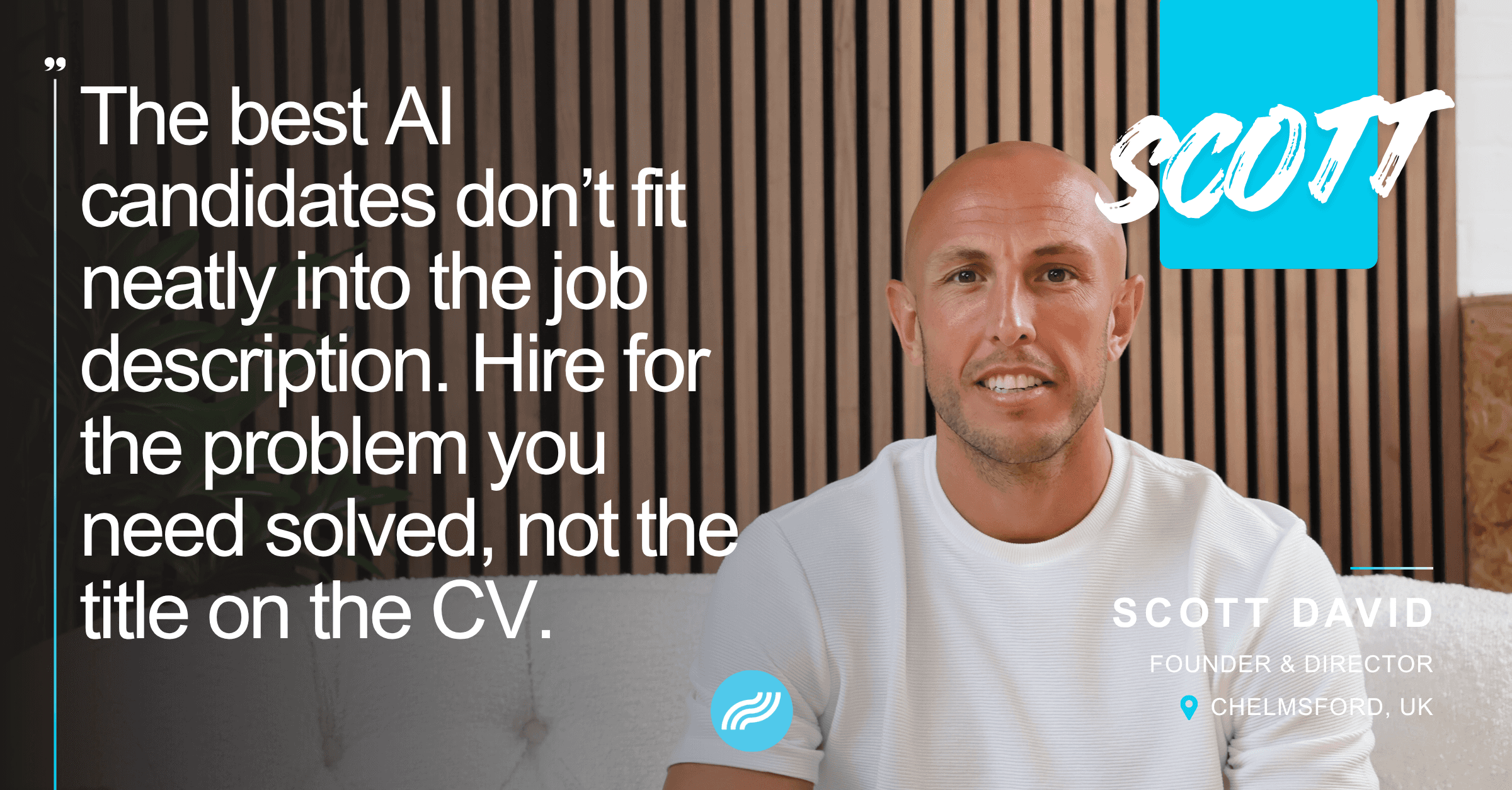
The most suitable person doesn't always have the exact job title written on the brief.
That's something we see regularly when recruiting across AI and emerging technologies.
Good recruitment starts with understanding the technology
When you're hiring for a highly technical role, matching keywords on a CV isn't enough.
You need to understand what the team is actually building.
What are the technical challenges?
Where is the product going?
Which skills are genuinely essential?
And where is there flexibility to consider someone with a slightly different background?
That understanding becomes particularly important when you're recruiting for specialist areas such as Voice AI, where the talent pool can be relatively small and candidates often have experience that crosses several technical disciplines.
It's also why the candidate experience matters.
A technically strong candidate needs to understand the opportunity just as well as the hiring team needs to understand them.
Scott recently received some great feedback from a candidate he supported through their interview process for a role at DeepL.
They highlighted the level of communication and preparation throughout the process, particularly the detailed feedback Scott provided after each interview.
“He went above and beyond by providing clear, actionable feedback after each interview, which significantly supported my preparation.”
They went on to say:
“I would highly recommend Scott as a recruiter and consider him among the best I have had the opportunity to work with.”
For us, this is a great example of what specialist recruitment should look like.
Understanding the technology helps us identify the right people.
Understanding the candidate helps us represent them properly.
And supporting them throughout the process helps both sides make a better decision.
The next generation of Voice AI talent
Voice AI is opening up a fascinating range of opportunities for engineers and AI specialists.
The people working in this space aren't necessarily coming from one traditional background. Some have spent years working with speech and audio. Others have moved across from machine learning, backend engineering, data or product development.
What connects them is their ability to work on technically complex problems where several disciplines overlap.
For hiring managers, that means thinking carefully about what you actually need from your next hire.
The perfect candidate might not have every keyword on the job description.
They might have solved the same underlying problem in a completely different environment.
That's where technical recruitment can add real value.
At Tides, we work closely with businesses building in AI, data and engineering to understand the technology behind the role, the team they're building and the people who will make the biggest impact.
Voice AI is developing quickly.
The engineering talent behind it is evolving with it.
And we're excited to see where both go next.
Articles