Jan 16, 2026
AI has entered its Agentic Era... and hiring is already changing
The AI conversation has shifted again. Quietly at first, then all at once.
For the past few years, progress was measured by models: size, accuracy, benchmarks, generation quality. The focus sat on what AI could produce in response to a prompt. That phase unlocked enormous value, though it was only ever a stepping stone.
What’s emerging now is something fundamentally different.
AI is moving from response to action.
Across leading AI teams, the focus is no longer on whether a model can generate output. The focus is on whether a system can plan, reason, act and adapt over time. This is the rise of agentic AI — autonomous, goal-driven systems that operate across workflows with minimal human intervention.
This shift matters because it changes how AI is built, deployed and maintained. It also changes who companies need to hire.
Agentic systems introduce complexity that traditional model-centric teams were not designed for. These systems need memory, decision loops, tool usage, evaluation, observability and failure handling. They exist within broader software ecosystems rather than as isolated components. As a result, AI teams are being reshaped around systems thinking rather than model experimentation.
We’re already seeing this play out in hiring conversations.
Roles that once focused narrowly on training or fine-tuning models are expanding. Hiring managers are prioritising engineers who understand how AI behaves in production environments. Reliability, latency, cost control and safety are becoming central concerns. The ability to reason about how an autonomous system behaves over time now carries more weight than familiarity with a single framework or library.
This is where the talent gap is forming.
There are many engineers who understand models. There are far fewer who understand how to design, operate and scale agentic systems in real-world conditions. The engineers in highest demand today are those who think in systems, understand trade-offs and take responsibility for outcomes beyond a demo or proof of concept.
From a hiring perspective, this shift requires a different lens.
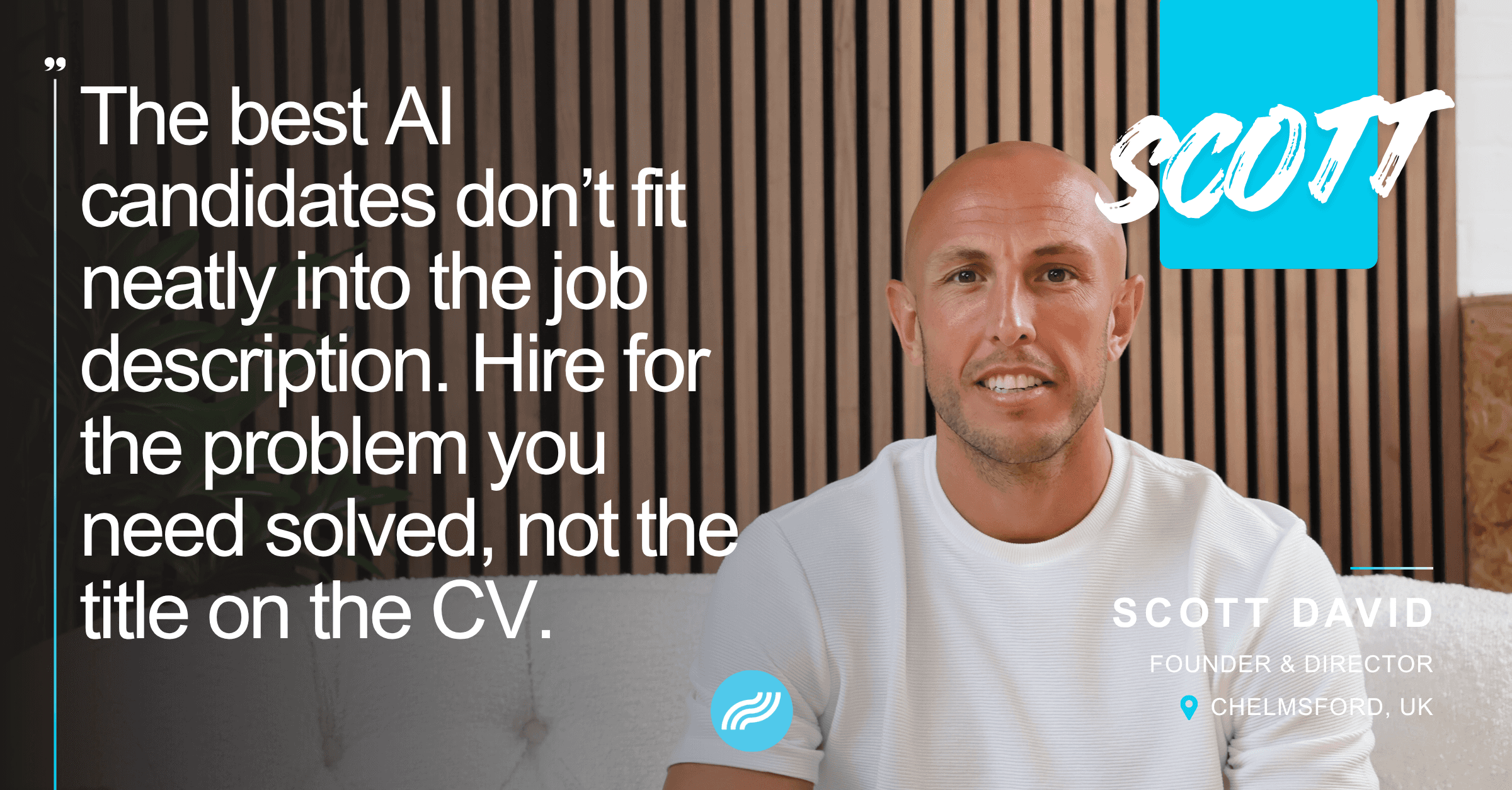
Job titles are becoming less informative than capability. Hiring teams are asking deeper questions about ownership, decision-making and delivery. They want to know whether a candidate has worked on AI that lives inside a product, serves users continuously and requires active management. They are listening for evidence of judgement rather than novelty.
For TA leaders and hiring managers, understanding this shift is critical. The market is moving faster than job descriptions. Companies that continue to hire for yesterday’s AI roles risk building teams that struggle to support tomorrow’s systems.
Agentic AI is not a distant concept. It is already shaping how products are built and how teams are structured. The organisations adapting early are redefining what good looks like in AI hiring, long before the language becomes mainstream.
This moment represents another inflection point. AI is no longer about what a model can generate. It is about what a system can do, consistently, safely and at scale. Hiring strategies that reflect this reality will be the ones that create lasting advantage.
Articles